
I remember one Tuesday night a few seasons back. I was casually watching an NBA game, half-distracted, when a relatively unknown player started making noise. He was hitting shots, making hustle plays, and generally outplaying guys with much bigger names. Turns out, he’d just been called up from the NBA G-League a couple of days prior. That night, he crushed his player prop over/under. It wasn’t a fluke either; he continued to perform well for the next several games.
The NBA G-League is often seen as a minor league, a place where players go to hone their skills before (hopefully) making it to the big leagues. While that’s true to an extent, the G-League’s impact extends far beyond player development. It’s a breeding ground for opportunity, a place where overlooked talent can shine and, more importantly for savvy bettors, a source of potentially profitable NBA player props.
The key is recognizing the impact a G-League call-up can have on an NBA player’s performance and, consequently, their player props. A guy who’s been dominating in the G-League, suddenly given a chance in the NBA due to injuries or roster changes, can bring a level of energy, hunger, and untapped potential that veteran players might lack.
This article is all about equipping you with the knowledge and strategies to capitalize on these situations. We’ll dive into how to identify potential impact players in the G-League, how to track call-ups (and why it’s crucial), and how to adjust your player prop betting strategy accordingly. Because, let’s be honest, in the world of NBA betting, every little edge counts. Monitoring G-League transactions isn’t just for die-hard fans; it’s a legitimate way to find value and increase your winning percentage. So, get ready to turn those overlooked G-League call-ups into profit!
Understanding the G-League Call-Up System
The G-League call-up system serves as a crucial pathway for aspiring basketball players to reach the NBA. It’s a mechanism that allows NBA teams to tap into the talent pool of the G-League, offering opportunities to players who might otherwise go unnoticed. This system operates under specific rules and guidelines, primarily focusing on player eligibility and contract types.
There are two primary avenues for G-League players to join an NBA team: standard call-ups and two-way contracts. Standard call-ups occur when an NBA team signs a G-League player to a regular NBA contract. Two-way contracts, introduced in recent years, allow players to be active for their NBA team for up to 50 games while primarily playing in the G-League. These contracts are a great way for developing NBA talent.
NBA teams utilize call-ups for various reasons. Injuries to key players are a frequent trigger, as teams need to fill roster spots quickly. Poor performance from existing players can also lead to a search for alternatives in the G-League. Sometimes, teams might seek a player with a specific skillset to exploit a particular matchup against an opponent. Keep in mind the eligibility requirements and important dates during the season that impact when call-ups can occur.
The G-League call-up system has produced success stories of players rising from the G-League into impactful NBA players. These players demonstrate the value of the G-League as a development league and a resource for NBA teams.
The Ripple Effect: How Call-Ups Impact NBA Rotations
In the ever-churning ecosystem of the NBA, a single event can set off a chain reaction, dramatically altering team dynamics. A G-League call-up, often viewed as a minor transaction, can act as just such a catalyst, reshaping NBA rotations and redefining player roles in ways both predictable and surprising.
Imagine this: your starting point guard goes down with an injury. Suddenly, the carefully constructed hierarchy crumbles. The immediate response might be to elevate the backup, but that leaves a void. Enter the G-League call-up. This new addition, hungry and eager to prove himself, injects fresh energy into the team. The backup PG now logs heavier minutes as a starter. The newly signed player might take his minutes off the bench.
The impact extends beyond the direct replacements. A call-up can unlock hidden potential, giving previously underutilized players a chance to shine. Perhaps a defensive specialist sees increased playing time to mask the deficiencies of the new backcourt pairing. Or maybe a scoring threat off the bench finds his usage rate spike, capitalizing on the added attention drawn by the new addition. It’s as if the coach is experimenting with new combos.
These shifts aren’t always obvious, but sharp observers can identify and exploit them. By paying close attention to minutes distribution, usage rates, and player combinations, fans can gain an edge in predicting performance. The beauty, albeit chaotic, of the NBA lies in its constant flux, and the ripple effect of a G-League call-up is a prime example of this dynamic in action. Some players get limited, and others gain great benefit.
Identifying Key Players Affected by Call-Ups
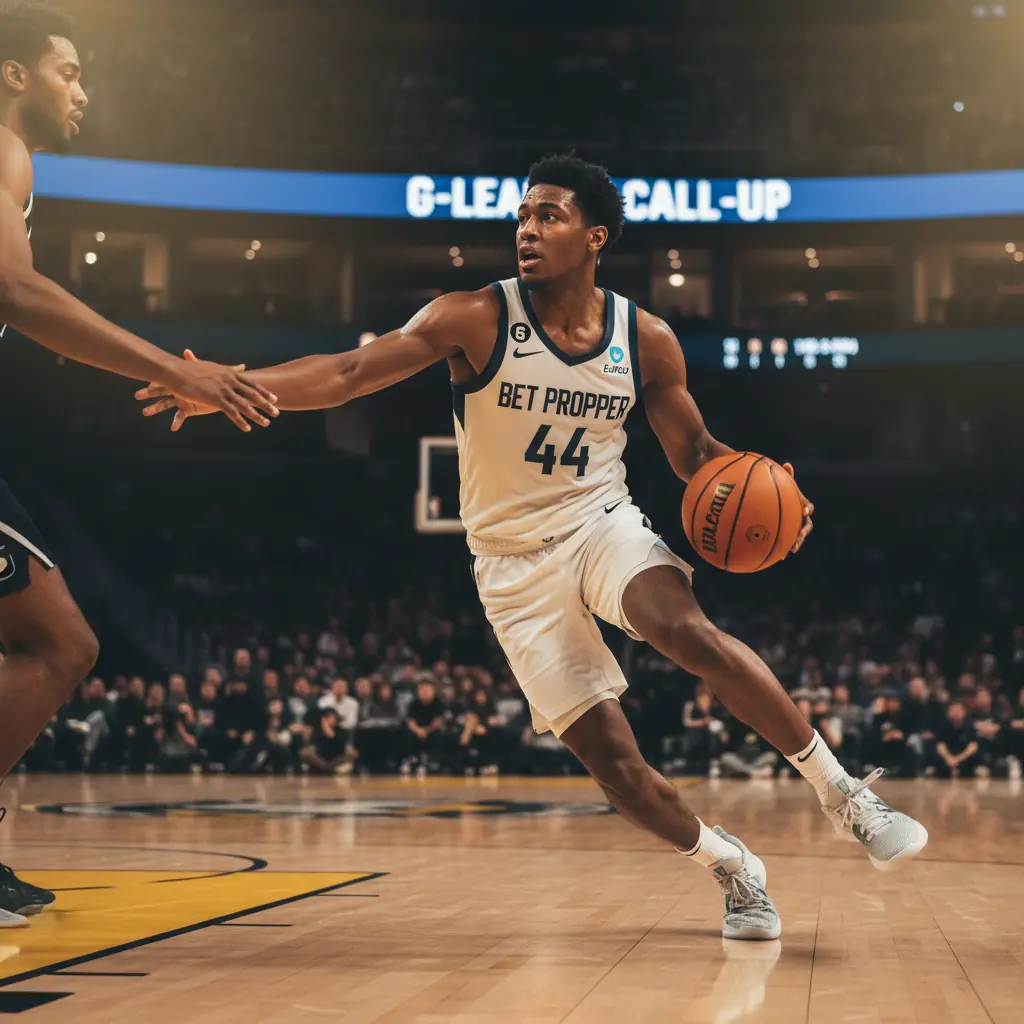
G League call-ups dramatically reshape NBA rotations and player roles. Typically, the biggest beneficiaries are the players teetering on the edge of consistent playing time. Think of the backup point guard who suddenly finds himself running the offense for stretches, or the defensive specialist who, despite limited offensive capabilities, becomes a crucial part of the team’s strategy due to an injury to a key player.
Call-ups especially impact minutes distribution. Players who were previously glued to the bench might see significant action, forcing coaches to experiment with different lineups. We’ve seen instances where positionally challenged players, perhaps a small forward playing out of position at power forward, get extended opportunities to prove their versatility. This disruption, while born out of necessity, can unearth hidden talent or expose glaring weaknesses within the team’s structure. Identifying these shifts is key to understanding the ripple effect of G League talent infusions on established NBA teams.
Prop Betting Strategies to Capitalize on Call-Ups
G-League call-ups can inject unpredictability into NBA games, but for astute bettors, they also present a goldmine of opportunity. The key lies in understanding how to analyze these situations quickly and effectively, spotting the discrepancies between a player’s potential and the bookmaker’s estimations. This isn’t about blind luck; it requires a calculated approach to player prop analysis, and solid NBA betting systems. Success hinges on identifying value where others see chaos.
Spotting the Opportunity: Identifying Prime Call-Up Prop Targets
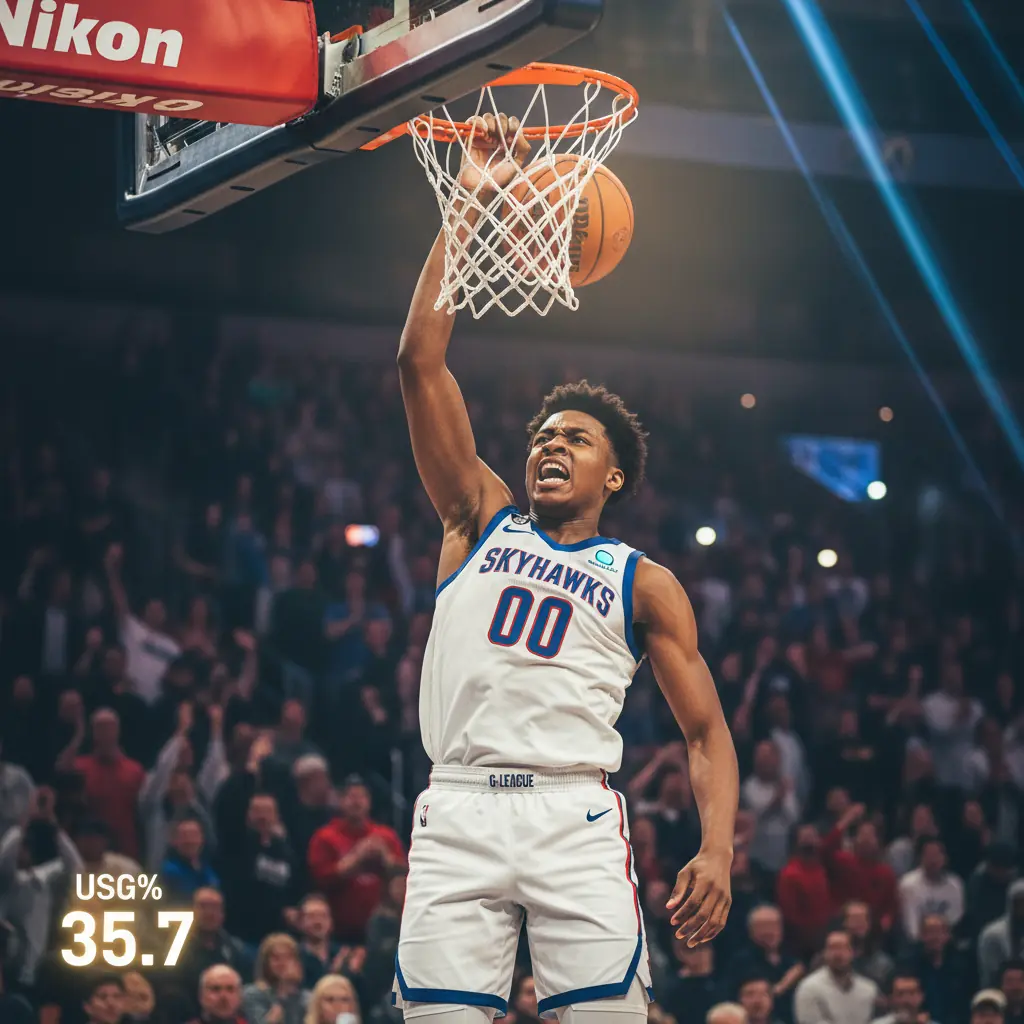
Pinpointing the right call-up prop starts with a deep dive into available data. Usage rate is your best friend here. A player suddenly thrust into a starting role or a significantly larger minute share is almost guaranteed to see an uptick in their usage. Scrutinize recent G-League box scores; a player consistently putting up high numbers is more likely to translate that production, even at a reduced rate, to the NBA level. You need to know what they are capable of. Fantasy basketball sites and NBA DFS tools are surprisingly useful for this, as they often provide projections and player comparisons based on different minute allocations. Matchup analysis is crucial. A call-up facing a team weak at their position represents a far more enticing betting opportunity than one going up against a defensive stalwart. Advanced stats such as true shooting percentage and assist percentage can offer deeper insights into a player’s efficiency and playmaking abilities. A combination of high usage rate and a favorable matchup creates the perfect storm for prop success. Identify what call-ups create is easy, find the right combination is not.
Over/Under Adjustments: Mastering the Numbers Game After a Call-Up
Adjusting your Over/Under expectations after a call-up demands a nuanced approach. For example, a forward known for rebounding being called up to a team missing their starting frontcourt players. If their normal Over/Under for rebounds is 4.5, you might consider bumping that up to 6.5 or even 7.5, depending on the quality of the opponent and how many minutes they are projected to play. Monitoring newsfeeds is crucial. Any information about a player’s likely role, the team’s game plan, or even anecdotal reports from practice can provide a significant edge. Remember that betting odds reflect public perception as much as statistical probability, so staying ahead of the curve on information is key to discovering profitable opportunities.
The No-Go Zone: Props to Avoid After a G-League Call-Up
Not all props are created equal when dealing with the volatility of G-League call-ups. You want to avoid props that are particularly susceptible to variance. Steals + Blocks, for instance, are notoriously difficult to predict reliably, even for established NBA players. A call-up might have one great defensive play, or zero, and completely bust your Over/Under based on pure chance. Some players’ performances are inherently volatile. A player known for streaky shooting, for example, is a high-risk, high-reward proposition. Finally, resist the urge to overreact to small sample sizes. A call-up might have one good game and can easily fade the next. It’s essential to maintain a long-term perspective and avoid chasing short-term fluctuations.
Disclaimer: Sports betting involves risk. It is important to gamble responsibly and only bet what you can afford to lose.
Tools and Resources for Staying Ahead of the Curve
To truly master NBA rotations, player roles, and the ever-shifting landscape of minutes distribution, a combination of dedicated resources and savvy social media monitoring is essential. Several websites offer in-depth statistical analysis, breaking news, and projected starting lineups. These platforms are invaluable for quickly assessing the impact of injuries and understanding potential shifts in team strategy. Supplementing these resources with real-time updates from reliable NBA insiders on social media provides an edge. These experts often dissect coaching decisions, offering insight into the rationale behind specific rotations and player utilization. By synthesizing statistical data with on-the-ground reporting, one can develop a comprehensive understanding of the factors that shape NBA player roles and playing time.
Conclusion
In conclusion, keeping a close eye on NBA G-League transactions and understanding the ever-shifting team dynamics can provide a significant edge in the world of player prop betting. The call-up phenomenon, while unpredictable, presents opportunities for astute bettors who are willing to do their homework. By applying the strategies discussed – monitoring player movements, analyzing team needs, and considering individual player performance – one can increase the chances of turning a profit.
Now that you’re armed with this newfound knowledge, you’re in control of your bets, ready to navigate the exciting intersection of the G-League and the NBA. I will continue to explore advanced analytics and predictive modeling within the G-League to further refine these betting strategies. This is just the beginning. It is time to use this knowledge.