
The roar of engines, the screech of tires, and the collective gasp of a global audience – that’s the energy that crackles around the F1 Abu Dhabi Grand Prix when it serves as the championship decider. It’s more than just a race; it’s a gladiatorial contest under the floodlights, where a season’s worth of relentless effort culminates in a single, heart-stopping event. The weight of history presses down on the Yas Marina Circuit, a modern coliseum that has witnessed dreams realized and shattered in equal measure.
Think about it: the sun sets, the tension rises, and the world holds its breath. The Abu Dhabi Grand Prix, bathed in artificial light, has become synonymous with high-stakes drama. This year promises no less. Two titans, locked in a season-long battle of wits and speed, stand ready to write their names into the annals of Formula 1. The air thrums with anticipation. Fortunes will be made, legacies cemented, and the echoes of cheering – or perhaps despair – will reverberate long after the checkered flag falls. I still remember watching one finale and how the strategic battle and pure speed created a memory that’ll last a lifetime.
The Championship Contenders
The 2025 F1 season culminates in a thrilling showdown, with several championship contenders battling for the ultimate prize. Each driver brings a unique blend of skill, experience, and determination to the track, setting the stage for an intense and unpredictable finale. Let’s delve into the profiles of the main contenders:
Max Verstappen
Max Verstappen, known for his aggressive driving style and unwavering confidence, is a formidable force on the track. He is the current favorite and constantly demonstrates exceptional car control and strategic prowess. His recent performances highlight his ability to consistently secure podium finishes, making him a prime challenger for the title. Entering this race, the psychological pressure is immense, but Verstappen’s experience will likely help him manage the tension with relative ease.
Lando Norris
Lando Norris, with his smooth driving style and undeniable talent, has emerged as a serious championship contender. He has demonstrated remarkable consistency throughout the season, securing multiple podiums. Norris’s strengths lie in his adaptability and ability to extract maximum performance from his car. Compared to Verstappen, Norris has less experience in title-deciding races, placing him in a position where he has everything to gain and little to lose.
Oscar Piastri
Oscar Piastri, the rising star of F1, has quickly proven himself as a force to be reckoned with. His clinical precision on track, combined with outstanding race management, makes him likely to steal the spotlight. While Piastri may lack the experience of Verstappen, his relentless determination and composure under pressure cannot be underestimated. The young and ambitious driver is known for maintaining a calm, collected approach, enabling him to make calculated decisions even in the most chaotic race situations.
Abu Dhabi Grand Prix – A Track Analysis
The Yas Marina Circuit, home to the Abu Dhabi Grand Prix, presents a unique blend of challenges for drivers and engineers alike. Its distinctive layout, characterized by a mix of high-speed straights and intricate technical sections, demands precision and adaptability. The track’s flowing first sector encourages daring maneuvers, setting the stage for thrilling battles into Turn 1.
Navigating the sequence from Turn 5 through Turn 9 requires pinpoint accuracy; carrying momentum through these corners is essential for a quick lap time. The long back straight leading into Turn 11 offers a prime overtaking opportunity, especially with the assistance of DRS. However, drivers must be mindful of tire management, as the abrasive track surface can induce significant degradation, impacting performance in the latter stages of the race.
The final sector, weaving under the iconic Yas Marina Hotel, tests a driver’s car control and demands maximum downforce. Successfully negotiating these corners is crucial for maintaining a strong pace to the finish line. Strategically positioned DRS zones provide further chances for drivers to gain ground, making the Abu Dhabi Grand Prix a captivating spectacle from start to finish. Mastering the Yas Marina Circuit requires a finely tuned car and a driver who can extract every ounce of performance from both themselves and their machine.

What Each Driver Needs to Win: Championship Permutations
The air crackles with anticipation as the Abu Dhabi Grand Prix approaches, the final showdown in a season of breathtaking races. Forget the simple math – this isn’t just about who crosses the finish line first. It’s a complex dance of points, positions, and possibilities, a championship decided by the finest margins.
Understanding the F1 points system is crucial to unraveling these title scenarios. A win grants 25 points, second place earns 18, and third receives 15, descending to a single point for tenth. Crucially, the driver with the fastest lap secures an extra point, provided they finish in the top ten. This seemingly small detail can tilt the balance in a tightly contested race.
Title Scenarios: Best-Case for Each Contender
Max Verstappen: Verstappen’s path to victory is the most straightforward. A strong qualifying session followed by a P1 finish essentially seals the deal, regardless of where other contenders place. Even a second-place finish, coupled with the fastest lap, puts immense pressure on his rivals. His consistency throughout the season has made him the clear favorite.
Lando Norris: For Norris to snatch the title, he needs a dominant performance and a stroke of luck. He absolutely must win the race, grabbing the fastest lap as well. Even then, Verstappen needs to finish outside the top five. It’s a steep climb, but F1 is no stranger to surprises, and Norris has the talent to capitalize on any opportunity.
Oscar Piastri: Piastri faces a monumental challenge. Mathematically, it’s still possible, but realistically, he needs a miracle. He needs to win, have Verstappen score no points, and rely on a series of unlikely events unfolding throughout the race. While highly improbable, stranger things have happened in the history of Formula 1.
The Abu Dhabi Grand Prix promises more than just a race; it’s a high-stakes chess match played at 200 mph. Every overtake, every pit stop, every tenth of a second counts towards shaping destiny. The permutations are complex, the pressure is immense, and the world will be watching to see who emerges victorious.
Team Strategies and Tactics
Formula 1 isn’t just about individual driver brilliance; it’s a complex chess match played at 200 mph, where team strategies and tactics often dictate the final outcome. The Abu Dhabi Grand Prix, with its unique characteristics, presents a particularly fascinating strategic challenge.
Tire Management: A Crucial Balancing Act
Tires are arguably the most critical strategic element. Teams meticulously analyze tire degradation data from practice sessions to predict how each compound – hard, medium, and soft – will perform during the race. Choosing the right starting tire and planning the optimal stint lengths are crucial. A team might gamble on an aggressive strategy with softer tires for early gains, knowing they’ll need to pit sooner. Conversely, a more conservative approach using harder compounds aims for longer stints and potentially fewer pit stops.
Pit Stop Perfection: Where Races Are Won and Lost
A flawless pit stop can gain a driver valuable track position, while a slow one can ruin their race. Teams invest heavily in pit stop training, shaving milliseconds off their times. The timing of pit stops is also critical. Teams use sophisticated simulations to determine the optimal laps to bring their drivers in, considering factors like traffic, tire wear, and the potential for safety cars. Overcut and Undercut strategies are also essential to consider. The undercut happens when an opponent is close behind, and by pitting first and putting in a fast lap on new tires can leapfrog the opponent. On the other hand, the overcut involves staying out longer than a rival with the aim of building enough of a gap to retain track position after a pit stop.
The Murky World of Team Orders
Team orders, where one driver is instructed to assist another, are a controversial but often necessary part of F1 strategy. In a championship-deciding race like Abu Dhabi, the stakes are incredibly high. A team might instruct a driver to move aside for their teammate who has a better chance of winning the race or securing crucial championship points. These decisions are never easy and can spark debate, but they are often made with the overall team’s best interests at heart. Consider when a driver is clearly faster, but their teammate is ahead with fewer points. Deciding when and how to swap them, without losing time to other competitors, can be intense. It is a strategic gamble that can pay off handsomely or backfire spectacularly. The team’s calculation will be based on the points disparity between the drivers, the number of laps remaining, and risk analysis to avoid losing positions to competing teams.
Under Pressure: Driver Psychology
The final race of a Formula 1 season is a psychological battleground as much as a physical one. Driver psychology plays a pivotal role when everything is on the line. It is not just about speed; it’s about managing the immense pressure, maintaining unwavering mental focus, and swiftly recovering from inevitable mistakes.
Pressure management is crucial. Drivers spend countless hours with sports psychologists, developing techniques to compartmentalize the external noise and internal anxieties. Visualization, meditation, and mindfulness exercises are common tools to stay grounded in the present moment. The ability to block out the roar of the crowd, the media frenzy, and the sheer weight of expectation can make or break a driver’s performance.
Maintaining mental focus is equally vital. A momentary lapse in concentration can lead to disastrous consequences. Drivers train their minds to remain laser-focused on the track, anticipating every turn, every braking point, and every move of their competitors. They use techniques like cognitive reframing to turn negative thoughts into positive affirmations, ensuring that self-doubt doesn’t creep in and compromise their decision-making.
Dealing with mistakes is another key aspect of driver psychology. Even the best drivers make errors on the track. The ability to quickly recover from a spin, a poor pit stop, or a misjudgment is a testament to their mental fortitude. Drivers learn to analyze their mistakes, extract lessons, and move forward without dwelling on the past. This resilience is what separates the champions from the contenders.
Key Moments and Controversies (if any)
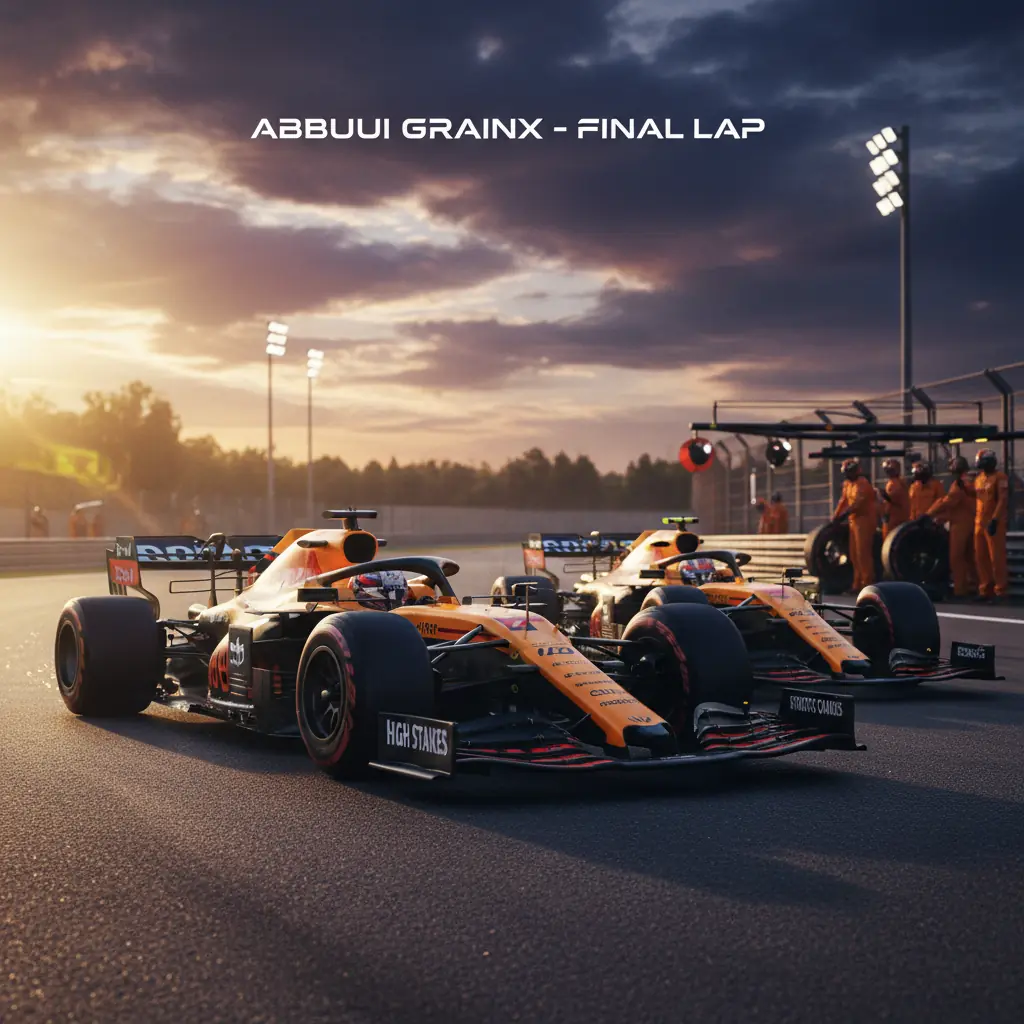
The Abu Dhabi Grand Prix, the final race of the Formula One season, was packed with pivotal moments, on-track battles, and controversial calls that ultimately defined the championship outcome. From lights out to the checkered flag, hardly a moment went by without high stakes drama unfolding.
Early on, a daring overtake established the tone for the race. The initial laps showed a fierce fight for position, featuring aggressive driving and strategic maneuvering. This set the stage for what would be a race of constant challenges and opportunities. The first safety car period was triggered by an incident forcing strategic changes across all teams, some capitalizing while others saw their plans unravel.
However, the defining moments came in the final laps. A late-race safety car, caused by a crash, bunched up the field and opened the door for a controversial decision regarding lapped cars. The decision to allow only some lapped cars to pass the safety car, followed by the restart with one lap remaining, completely changed the complexion of the race. This led to a one-lap sprint finish that saw a dramatic change in the lead and ultimately decided the championship.
Stewards decisions throughout the race were under intense scrutiny. Penalties issued (or not issued, depending on the perspective) became focal points of debate. These decisions, along with the management of safety car periods, undeniably influenced the race’s outcome and sparked considerable controversy among fans and teams alike. The immediate aftermath was filled with passionate reactions, with questions raised about the fairness and consistency of race control decisions.
Expert Predictions and Analysis
The Abu Dhabi Grand Prix is poised to be an epic showdown, a culmination of a season-long battle. Predicting the outcome of such a high-stakes race is never easy, but some factors point towards a potentially thrilling conclusion. While both contenders have demonstrated incredible skill and determination throughout the year, subtle advantages could tip the scales.
One crucial aspect will be the psychological game. The driver who can best manage the pressure and maintain focus will have a significant edge. Strategy will be key, and how each team utilizes pit stops and tire management could be the difference between victory and defeat. The reliability of the cars is also paramount. Any mechanical issue at this stage would be devastating, and the teams will be working tirelessly to ensure their machines are in perfect condition.
Considering all these elements, it is expected a very close race. Ultimately, the driver who can combine speed, strategy, and composure under immense pressure will likely emerge victorious. It’s a coin toss, but one expects a champion to be crowned in a blaze of glory, solidifying their place in F1 history.
Conclusion
The 2025 F1 Abu Dhabi Grand Prix, a true championship decider, delivered a season finale for the ages. From lights out to the checkered flag, the tension was palpable. The race will be remembered as a defining moment in Formula 1 history, solidifying a legacy of fierce competition and unforgettable drama. The echoes of this season will resonate for years to come.